
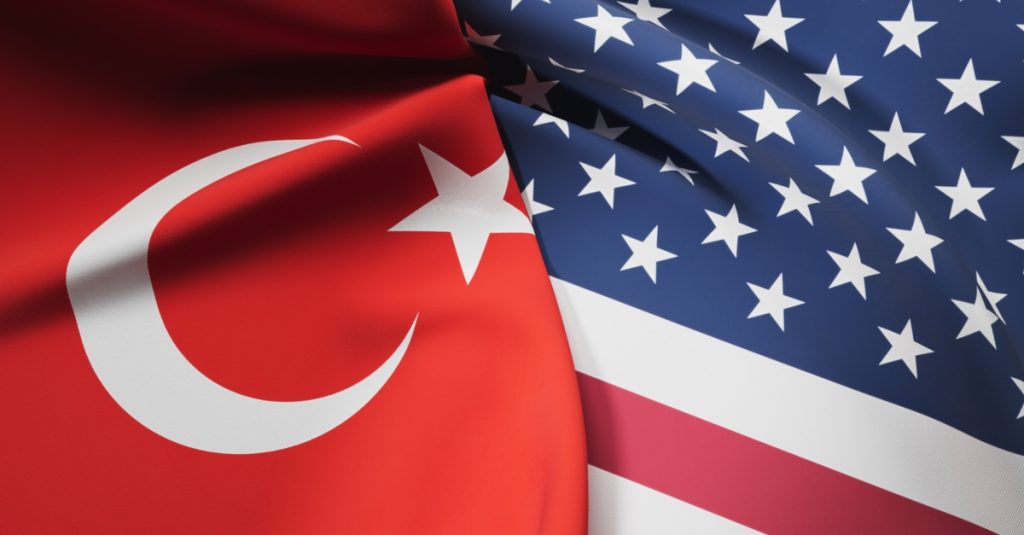
President Trump effectively said it himself. He went to Ankara to see President Recep Tayyip Erdoğan and made clear that he would not have made the journey for most other leaders. He also said plainly that he stood with Turkey. Those remarks matter because they reveal that the NATO summit itself was almost just a show. The summit provided the backdrop, but Erdoğan and Turkey were the focus.
Since returning to office for a second term, Trump has been attempting to close many of the long-running open geopolitical wounds of the world. India and Pakistan, Armenia and Azerbaijan, Thailand and Cambodia, and Rwanda and the Democratic Republic of Congo, for example. These are not simply isolated disputes. They are pressure points that could and have been activated, cooled, inflamed or exploited by powers that benefit from instability.
Part of Trump’s broader strategy is to disrupt that model. He is trying to stitch together settlements where previous administrations merely managed conflict rather than resolving it. That places him in direct opposition to global vested interests that have long used unresolved territorial, ethnic, religious and political fractures for leverage and profit. Open wounds produce weapons sales, emergency financing, political dependency, intelligence access and opportunities to acquire assets during periods of crisis.
Iran and Israel represent one of the most important of these wounds. But repairing it requires more than diplomacy. The weapons already placed across that region’s chessboard must also be removed.
The weapons attrition process in Iran’s case is sadly violent and people are dying, but the strategic objective is to prevent a far greater catastrophe, which would be a complete regional war that could quickly engulf Lebanon, Syria, Iraq, the Gulf, Turkey and, eventually, NATO.
The context in which Turkey must be understood
Turkey possesses the second-largest military in NATO and occupies one of the most strategically important locations in the world. It controls the route between the Black Sea and the Mediterranean, borders Iran, Iraq and Syria, faces the Caucasus, sits opposite Europe and remains deeply connected to Central Asia and the wider Muslim world. It is not simply a bridge between East and West. It is a crossroads through which several civilisations, trade routes, military theatres and political systems coalesce.
Frequently described as a leader who plays every side against the other, Erdoğan’s behaviour has been shaped by Turkey’s geography. He negotiates with Washington while maintaining relations with Moscow. He deals with NATO while purchasing Russian weapons. He speaks to Europe, the Gulf states, Iran, Israel and political movements that Western governments often refuse to. But he plays the cards his environment dictates, given that he is surrounded by instability. He cannot afford a predictable foreign policy and has managed to avoid becoming fully dependent on any single bloc. Trump appears to recognise this. Rather than demanding that Erdoğan stop balancing competing powers, Trump’s position is more direct: continue playing the game but play it with Washington rather than against it.
The mutual respect between the two men is therefore important. Both present themselves as nationalist leaders resisting a globalist establishment. Both prefer personal diplomacy over institutional procedure and both value strength, unpredictability and the ability to negotiate outside conventional channels. Against a backdrop of leaders who speak the language of multilateral management, Trump and Erdoğan speak the language of sovereignty and power.
The gun gifts at the summit reflected this relationship. At one level, they were a reminder that Turkey’s arms industry is one of the few sectors of the economy that has remained globally competitive. Turkish firearms are exported widely, including to the US, while Turkish drones, armoured vehicles and other defence products have become increasingly influential. But the gifts also expressed cultural affinity. Gun culture, national defence, sovereignty and military capability carry political meaning for both leaders. The gesture was not simply ceremonial. It symbolised the area in which Turkey has remained strongest, even as other parts of its economy have struggled.
What Trump can therefore offer Erdoğan in return for bringing Turkey decisively into his geopolitical project is money and stability.
Turkey has endured one currency crisis after another for some fifteen years. The lira has been repeatedly crushed, while inflation and capital flight have weakened the domestic economy. Hot money flows into Turkey, builds up markets and asset prices, and then leaves when pressure needs to be applied or profits realised. This cycle has till now kept Erdoğan on a short financial leash. However, Trump can offer him a way out.
He can offer Turkey access to a more stable dollar-based financial system and reduce its dependence on European and offshore capital networks. Turkey is already moving in that direction. As confidence in the lira has weakened, dollars, Bitcoin and dollar-backed stablecoins have all been flowing into the country. In practical terms, Turkey is becoming an increasingly important home for the US dollar outside the traditional banking system.
That makes it a potential testing ground for the financial architecture Trump and Treasury Secretary Scott Bessent are attempting to build. The objective is to move away from the existing Eurodollar system and towards a regulated stablecoin environment that extends dollar influence directly into emerging economies.
For Erdoğan, the attraction is obvious. A new financial arrangement could offer currency stability, investment, trade access and protection from repeated speculative attacks. For Trump, it would anchor Turkey more firmly within an American-led economic system while weakening the influence of European financial centres and other global networks that have historically used Turkey’s vulnerability as leverage. The economic bargain would also make further global demilitarisation possible.
Conclusion
Turkey has been forced to devote enormous resources to military preparedness for decades. Its geography, internal tensions and external threats have required heavy defence investment. But those resources could instead help rebuild civilian industry, infrastructure, energy production and advanced manufacturing with the promise of long-term national development.
So, Turkey could see security development and financial stability in exchange for reducing its role as a permanently militarised frontier state. All while becoming a model for Trump’s emerging financial system aligned with a new regional settlement.
To download a copy of this article, please click here.