Introduction
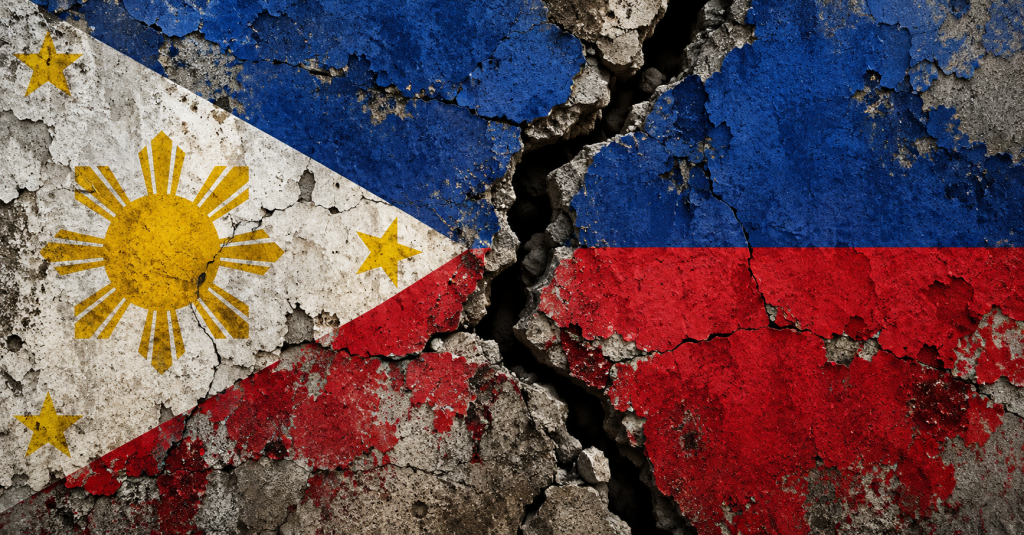
On 30 October 2026, while Polish President Karol Nawrocki was flying to Senegal on an official visit, an extraordinary confrontation unfolded in Warsaw. Police gathered outside Poland’s Constitutional Tribunal, its president, Bogdan Święczkowski, faced a disputed suspension, and rival judicial factions struggled for control of the institution. Nawrocki immediately abandoned his journey and ordered his aircraft back to Poland.
The opposition described the events as an attempted constitutional coup. Prime Minister Donald Tusk’s government maintained that it was restoring constitutional legality. Yet the circumstances seem to suggest something far deeper involved in Tusk’s calculus. Why did a judicial dispute stretching back years suddenly require such dramatic action, and why proceed while the country’s president was airborne? The answer may have less to do with judicial reform than with the growing financial and geopolitical pressures surrounding Poland.
The constitutional confrontation
Poland’s judicial crisis originates in the institutional changes brought in by the Law and Justice (PiS) government after 2015. When Tusk returned to power in December 2023, he promised to reverse those reforms. However, Poland’s president and Constitutional Tribunal did not recognise the legality of his government’s approach. Nawrocki’s presidential victory in June 2025 compounded the problem, preserving an independent centre of political authority capable of resisting government legislation and disputed appointments. By October 2026, competing judicial factions were challenging one another’s legitimacy. On 30 October, Judge Anna Korwin-Piotrowska announced the suspension of Tribunal President Święczkowski and Vice-President Bartłomiej Sochański. The existing leadership rejected her authority.
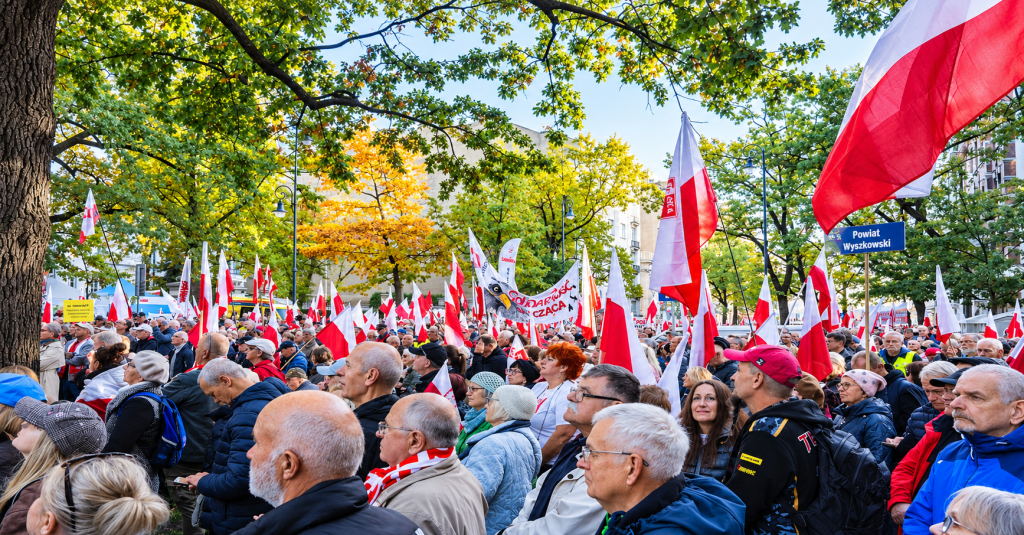
Police were deployed, protesters gathered, and the confrontation developed into a struggle over physical access to a constitutional institution.
The timing was extraordinary
Nawrocki’s aircraft had already departed Poland. His absence was temporary, entirely predictable and publicly known. Yet the confrontation escalated during precisely that window. Indeed, the president’s office subsequently alleged that the timing was deliberate.
For a government claiming to defend constitutional order, the spectacle of police surrounding a constitutional court while the head of state hurried home presented an uncomfortable image. The episode also also reminds one of when Romania’s controversial annulment of its 2024 presidential election, another instance in which constitutional authority became central to an intense political struggle within the EU.
Brussels and the financial imperative
The wider European circumstances appear connected. France faces massive mounting public debt, and Germany’s industrial economy is on the same path and accelerating. Expensive energy, regulatory requirements and American investment incentives are encouraging German manufacturers to reconsider where their future factories should be built. A November 2026 survey by Germany’s Chamber of Commerce and Industry found that 29% of German businesses surveyed in America were shifting investment towards the US in response to American trade policy. When future manufacturing capacity moves abroad, employment and domestic tax revenues will follow.
Meanwhile, European Commission President Ursula von der Leyen has identified approximately €10 trillion in European household bank deposits as potential investment capital. Her Savings and Investments Union seeks to mobilise more of that money for European economic priorities.
Why Poland matters
Poland actually presents an awkward contrast to some of Europe’s largest economies and represents a strong argument against many EU policy directives. Its economy is forecast to grow by approximately 3.5% in 2026, considerably faster than Germany or France. It retains its national currency, the złoty, has accumulated roughly 700 tonnes of gold and has also maintained restrictive controls against irregular migration across its Belarusian border. The political optics are striking. Here is a country retaining monetary independence and pursuing a distinctive border policy is outperforming the major eurozone economies in growth. For critics of deeper European integration, Poland provides a highly visible example of national policy autonomy.
Washington and the Ukrainian corridor
It should be noted that Poland is the principal logistical gateway for much of the Western military equipment entering Ukraine. President Trump, in his attempt to bring about a negotiated conclusion to the Russia–Ukraine conflict, is confronted with differences within European governments that favour continued military assistance.
Part of his plan to place a larger permanent US military presence in Poland will be to assuage the Polish over their security concerns regarding Russia, but that presence could also be used to restrict weapons supply to Ukraine should Zelenskiy remain reluctant to negotiate peace.
While Tusk did authorise preparations for the proposed base in June, his co-operation with Washington does not indicate his agreement over the possible wider direction of US policy. Nevertheless, while Tusk can confront Nawrocki over domestic constitutional authority, openly opposing Washington over Poland’s military security would involve substantially greater political risks.
Conclusion
The Constitutional Tribunal clash cannot be considered in isolation from Europe’s financial and strategic difficulties. France faces economic collapse with Germany not too far behind and Brussels is desperately seeking additional investment capital. Yet Poland retains significant monetary independence and substantial sovereign gold reserves. Washington, meanwhile, is pursuing a different strategic approach towards Ukraine and strengthening its direct military relationship with Poland. Within this context, the struggle over Poland’s constitutional institutions carries consequences extending beyond judicial appointments.
Tusk’s longstanding European relationships make the government’s institutional confrontation particularly important as part of Brussels’ wider interests. The events of 30 October remain the defining event. A longstanding constitutional disagreement escalated dramatically, with police deployed and rival claims to judicial authority asserted while Poland’s elected president was travelling abroad. Was the objective simply to resolve a judicial dispute, or to secure control of a strategically important institution before the political environment changed? Poland’s crisis may reveal as much about the pressures confronting Europe as it does about the struggle for power in Warsaw.
To download a copy of this article, please click here.