USA

The collapse of the old order: Europe’s political crisis and the rise of strategic realignment

The geopolitical assumptions that defined the post-Cold War era are rapidly disintegrating. Across Europe, traditional political parties are collapsing under the weight of public frustration, while NATO struggles to adapt to the realities of modern warfare exposed by Ukraine. At the same time, the media environment that once sustained Western consensus politics is fragmenting as [...]

The collapse of the old order: Europe’s political crisis and the rise of strategic realignment Read More »

The Turkey threat: Israel, Syria and the edge of conflict

Turkey’s emergence as a primary strategic concern for Israel is no longer confined to diplomatic disputes or rhetorical clashes. Increasingly, Israeli political and military circles are presenting Ankara as a long-term structural threat within the changing architecture of the Middle East. Turkish President Recep Tayyip Erdoğan’s increasingly confrontational posture toward Israel, combined with Ankara’s efforts

The Turkey threat: Israel, Syria and the edge of conflict Read More »

Strategic Tension

One of the very few theorical frameworks that actually seems to make sense of the geopolitical chaos we see today is that the City of London, and its aligned transnational financial networks, are in the process of liquidating the West, while trying to decamp to China. But things have not exactly gone according to plan.

Strategic Tension Read More »

Politics be damned

This is no longer about Ukraine. It is about trajectory. The UK and EU leaders are driving their nations to a point where economic fragility, political fragmentation and strategic overreach will meet like a train crash. The continued rhetoric of open-ended confrontation with Russia may play well in chambers and summits, but the negative consequences

Politics be damned Read More »

China and the Power of One

China’s political direction since Donald Trump first entered the White House has often been described as reactive; a series of responses to tariffs, technology controls and diplomatic pressure. In reality, Beijing’s trajectory has been shaped less by Washington’s personalities than by a deeper conclusion reached within the Chinese Communist Party (CCP), that the era of

China and the Power of One Read More »

Canada’s strategic crossroads: navigating between Washington and Beijing

The environment that supported Canadian foreign policy since the end of the Cold War is fragmenting, with power politics returning to the centre of international relations and economic policy increasingly tied to strategic competition. Prime Minister Mark Carney’s speech at the World Economic Forum (WEF) reflected this assessment, arguing that the global governance framework is

Canada’s strategic crossroads: navigating between Washington and Beijing Read More »

Is the EU at war with the US or with itself?

The claim that the EU is “at war” with the US sounds hyperbolic at first glance. Washington remains Europe’s principal security guarantor, its largest external trading partner and (through NATO) the backbone of continental defence. Yet, beneath the formal architecture of alliance, a more corrosive dynamic has emerged. Policy choices taken in Brussels and several

Is the EU at war with the US or with itself? Read More »

ARC and the powers determined to stop it

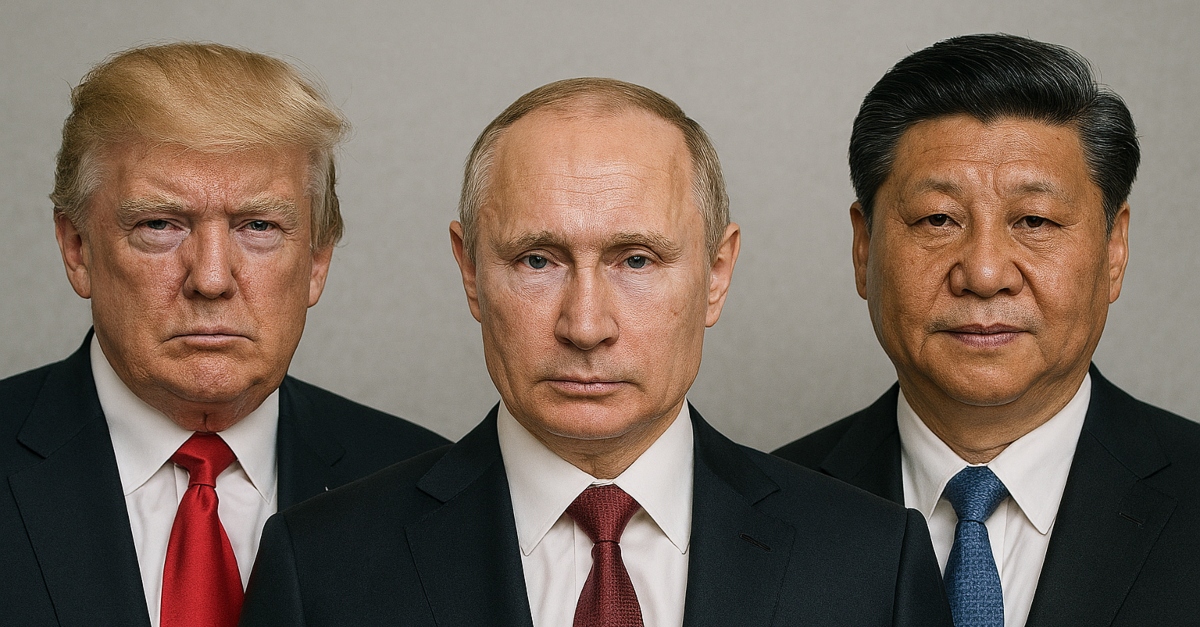
For the first time since the end of the Cold War, the world’s three largest powers (the US, Russia and China) are showing signs of drifting into a pragmatic triangular balance. It is not an alliance, and it is not ideological. It is, instead, the product of converging interests. Quiet US-Russia communications on energy and

ARC and the powers determined to stop it Read More »

Japan, US: a golden age?

When Sanae Takaichi was elected as Japan’s first female prime minister on 21 October, many observers were quick to raise scepticism and criticism. But taking a step back from the usual negative-narrative lens reveals a number of real indicators that Japan might be entering a much more dynamic era; one in which strong leadership, a

Japan, US: a golden age? Read More »

Supply Chains and Sovereignty: the rising trend of localisation vs globalisation

In the past, the logic behind global supply chains was deceptively simple: source components where they were cheapest, assemble products where production was most efficient/ economical, and sell where demand was strongest. This model, refined over decades, essentially prioritised cost and scale above nearly all other considerations. Yet, in recent years, geopolitical pressures, technological competition

Supply Chains and Sovereignty: the rising trend of localisation vs globalisation Read More »

Scroll to Top