risks

Turkey, Russia and China’s ungainly relations

Europe’s political class has once again found itself in a state of anxious overreaction, this time sparked by comments from European Commission President, Ursula von der Leyen, that appeared to place Turkey in the same geopolitical category as Russia and China. The diplomatic tremors that followed were revealing not because they exposed some new strategic [...]

Turkey, Russia and China’s ungainly relations Read More »

AI is not the God button

People from all industry sectors question the integrity of AI based on their own experience and use cases. However, with these opinions, there are so many different variables it is quite honestly disturbing. For starters, AI is not one instance sitting in the hardware clouds like a mega all-encompassing brain. There are hundreds, if not

AI is not the God button Read More »

A converging theatre: Iran, Venezuela and the quiet realignment of power

What has unfolded in Iran over the past five weeks cannot be understood in isolation. The mass protests, economic collapse and subsequent military escalation form part of a broader pattern that echoes earlier events in Venezuela. Both nations, deeply embedded in global energy markets and historically resistant to US influence, have faced internal destabilisation amid

A converging theatre: Iran, Venezuela and the quiet realignment of power Read More »

Insecurity, Uncertainty and Indecision

The British government is not facing the risk of failure, it is already there. Insecurity at the top, uncertainty in policy and indecision in execution are not emerging trends but defining characteristics of the current administration. They are visible across foreign policy, public finances, resource allocation and defence, all reinforced by a Cabinet that lacks

Insecurity, Uncertainty and Indecision Read More »

Politics be damned

This is no longer about Ukraine. It is about trajectory. The UK and EU leaders are driving their nations to a point where economic fragility, political fragmentation and strategic overreach will meet like a train crash. The continued rhetoric of open-ended confrontation with Russia may play well in chambers and summits, but the negative consequences

Politics be damned Read More »

China and the Power of One

China’s political direction since Donald Trump first entered the White House has often been described as reactive; a series of responses to tariffs, technology controls and diplomatic pressure. In reality, Beijing’s trajectory has been shaped less by Washington’s personalities than by a deeper conclusion reached within the Chinese Communist Party (CCP), that the era of

China and the Power of One Read More »

The US, EU and the UK: defence or destruction?

Transatlantic relations are entering a period of visible tension as political, economic and strategic pressures converge across the US, the EU and the UK. President Donald Trump’s return to office has accelerated these stresses rather than created them, exposing structural weaknesses that had been masked by habit, shared rhetoric and institutional inertia. Nowhere is this

The US, EU and the UK: defence or destruction? Read More »

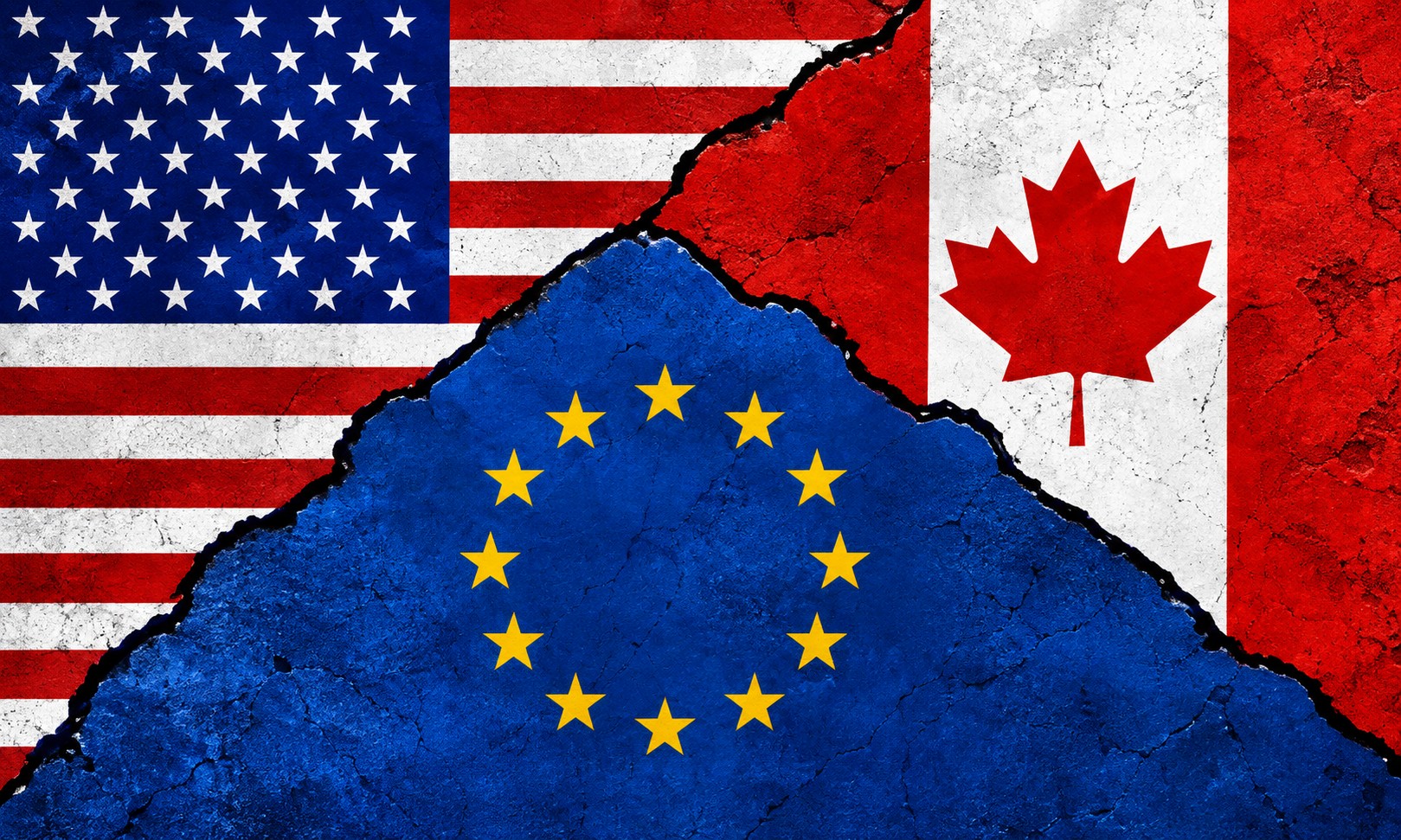
Is the EU at war with the US or with itself?

The claim that the EU is “at war” with the US sounds hyperbolic at first glance. Washington remains Europe’s principal security guarantor, its largest external trading partner and (through NATO) the backbone of continental defence. Yet, beneath the formal architecture of alliance, a more corrosive dynamic has emerged. Policy choices taken in Brussels and several

Is the EU at war with the US or with itself? Read More »

ARC and the powers determined to stop it

For the first time since the end of the Cold War, the world’s three largest powers (the US, Russia and China) are showing signs of drifting into a pragmatic triangular balance. It is not an alliance, and it is not ideological. It is, instead, the product of converging interests. Quiet US-Russia communications on energy and

ARC and the powers determined to stop it Read More »

The end of the Global South? A fragmenting bloc with no common interests

The term Global South has served as diplomatic shorthand for a loose coalition of developing states seeking greater voice in a world dominated by Western institutions and norms. The label implied shared grievances and converging interests, suggesting that formerly marginalised regions could act collectively to reshape global governance. Today, however, this narrative is increasingly hard

The end of the Global South? A fragmenting bloc with no common interests Read More »

Scroll to Top