China

Warfare by any other name?

For years, European officials have spoken about “hybrid warfare” as though it were a future threat. It is not. It is already embedded in the political and economic landscape of the continent, and has been raging for years. Hybrid warfare does not begin with tanks crossing borders. It begins with ambiguity. It operates in the [...]

Warfare by any other name? Read More »

China and the Power of One

China’s political direction since Donald Trump first entered the White House has often been described as reactive; a series of responses to tariffs, technology controls and diplomatic pressure. In reality, Beijing’s trajectory has been shaped less by Washington’s personalities than by a deeper conclusion reached within the Chinese Communist Party (CCP), that the era of

China and the Power of One Read More »

Canada’s strategic crossroads: navigating between Washington and Beijing

The environment that supported Canadian foreign policy since the end of the Cold War is fragmenting, with power politics returning to the centre of international relations and economic policy increasingly tied to strategic competition. Prime Minister Mark Carney’s speech at the World Economic Forum (WEF) reflected this assessment, arguing that the global governance framework is

Canada’s strategic crossroads: navigating between Washington and Beijing Read More »

The age of strategic fatigue: why great powers are running out of appetite, not capability

At first glance, the global system appears more militarised and confrontational than at any point since the late Cold War; no surprise there with some 60 major conflicts affecting life and limb around the world as we speak. While this is underway, defence budgets are expanding across NATO, East Asia, the Middle East and Russia,

The age of strategic fatigue: why great powers are running out of appetite, not capability Read More »

ARC and the powers determined to stop it

For the first time since the end of the Cold War, the world’s three largest powers (the US, Russia and China) are showing signs of drifting into a pragmatic triangular balance. It is not an alliance, and it is not ideological. It is, instead, the product of converging interests. Quiet US-Russia communications on energy and

ARC and the powers determined to stop it Read More »

The Birth of a Tri-polarity: ARC (America-Russia-China)

Over several months, a subtle but potentially significant geopolitical realignment has been unfolding. Less and less is being discussed publicly about BRICS, while quiet discussions are getting a little louder about the possibility of a de facto tripolar system among the US, Russia and China. This emergent formation (some geopolitics analysts are now calling it ARC) is not

The Birth of a Tri-polarity: ARC (America-Russia-China) Read More »

Europe’s push for rare earth magnet production: can it wean off China?

Europe’s debut into large-scale rare-earth magnet manufacturing via the newly opened plant in Narva, Estonia, is a bold signal. Backed by EU funds and Canadian Export Credit Agency loans, this facility represents a strategic effort to break China’s long-standing stranglehold on critical magnet supply chains. But as promising as that may seem, the road to

Europe’s push for rare earth magnet production: can it wean off China? Read More »

Supply Chains and Sovereignty: the rising trend of localisation vs globalisation

In the past, the logic behind global supply chains was deceptively simple: source components where they were cheapest, assemble products where production was most efficient/ economical, and sell where demand was strongest. This model, refined over decades, essentially prioritised cost and scale above nearly all other considerations. Yet, in recent years, geopolitical pressures, technological competition

Supply Chains and Sovereignty: the rising trend of localisation vs globalisation Read More »

Scandium Stockpiling: the new minerals arms race

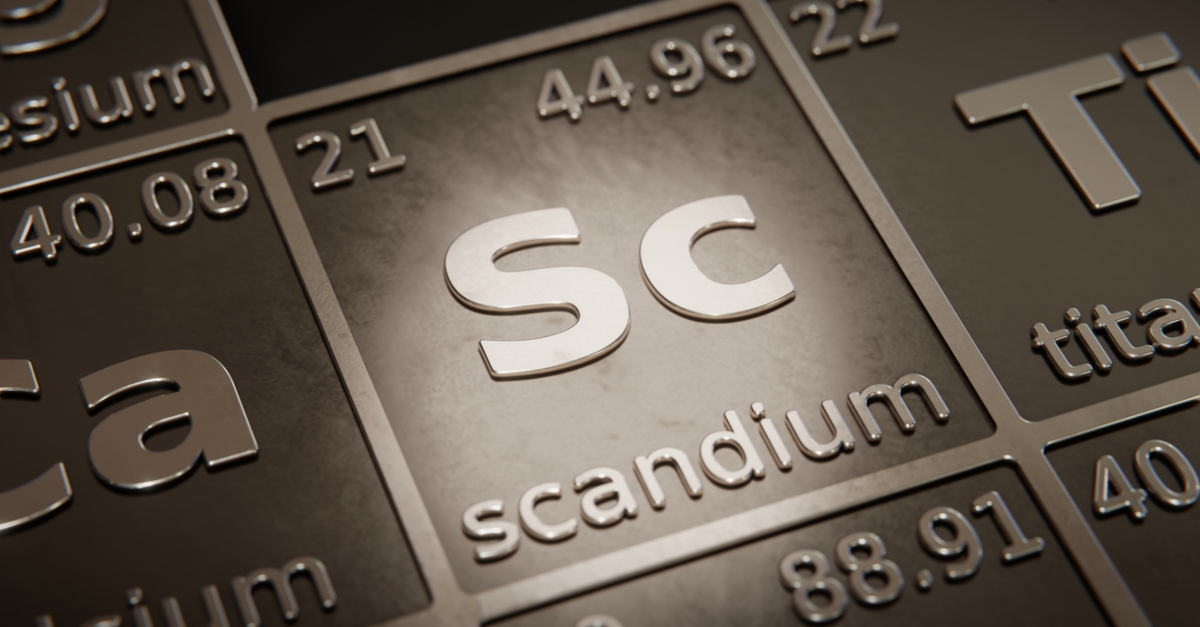
Scandium has quietly shifted from an obscure industrial input to a geopolitical bargaining tool. In mid-2025, Beijing brought it under its export licensing system, meaning buyers now wait longer and face tougher approvals. The EU reacted in July with a formal resolution criticising the move, underlining how even minor minerals are being pulled into bigger

Scandium Stockpiling: the new minerals arms race Read More »

Laos, China and the Corridor

Since the China Laos Railway (CLR) began service in December 2021, Laos has shifted from a land-locked cul-de-sac to a viable overland bridge into China and, by extension, East Asia and Europe. Throughput is climbing with the line moving close to 3 million tonnes in the first half of 2025, up 8.8% year-on-year, indicating deeper

Laos, China and the Corridor Read More »

Scroll to Top